All Technical Reviews
Browse all AI engineering teardowns by topic.

Deep Dive into Tencent WeKnora: Enterprise Knowledge Framework & Multi-Step Agent Architecture
Targeting enterprise document comprehension and multi-step task execution, Tencent's open-source WeKnora integrates RAG, Agent orchestration, and Wiki knowledge management. It natively supports 27 LLM vendors, sandboxed dynamic tool execution, and multi-channel IM integration with production-grade RBAC.
Deep-Dive OpenDesign: Rewriting the Claude Design Paradigm with a Local Filesystem Engine
Open-source open-design shatters closed design loops with a local-first architecture. This deep-dive evaluates its multi-model runtimes, DeepSeek Harness integration, and production workflows for elite engineers.
Breaking the Mobile AI Bottleneck: Deep Dive into mobile-mcp (8.3k+ Stars)
An in-depth technical analysis of mobile-next/mobile-mcp. By leveraging an Accessibility-first tree parsing approach instead of costly vision models, the protocol unifies device control across iOS and Android simulators, emulators, and real hardware.

Killing UI Hallucinations: How VoltAgent's DESIGN.md Terminates Plastic AI Design
The open-source project VoltAgent/awesome-design-md leverages plaintext DESIGN.md specifications to eliminate severe visual drift in AI-generated UIs. This article deconstructs its underlying architecture, runtime data flows, and production integration practices.
Ditch Grep and Vector DBs: Graphify Turns Your Entire Codebase Into a Queryable Knowledge Graph
Traditional full-text search and vector chunking struggle with massive codebases. Graphify leverages local tree-sitter AST parsing and graph topology traversal, converting code, docs, PDFs, and multimedia assets into a deterministic knowledge graph without relying on external LLM APIs, fundamentally shifting how engineers interact with large-scale projects.
Breaking the Hype: How ai-engineering-from-scratch Rebuilds AI Engineering Through 523 Rigorous Lessons
Addressing the stark gap between 84% student AI adoption and 18% professional readiness, rohitg00/ai-engineering-from-scratch delivers 20 phases of production-grade source code, taking developers from vector math to MCP protocol implementations.
Deconstructing Cloudflare's security-audit-skill: Multi-Agent Isolation Harness for Vulnerability Hunting
Cloudflare's security-audit-skill hits 23k+ Stars. By enforcing a six-phase state machine, isolated hunter sub-agents, and adversarial cross-validation, it eliminates single-agent hallucinations and context pollution, setting an industrial standard for automated security workflows.
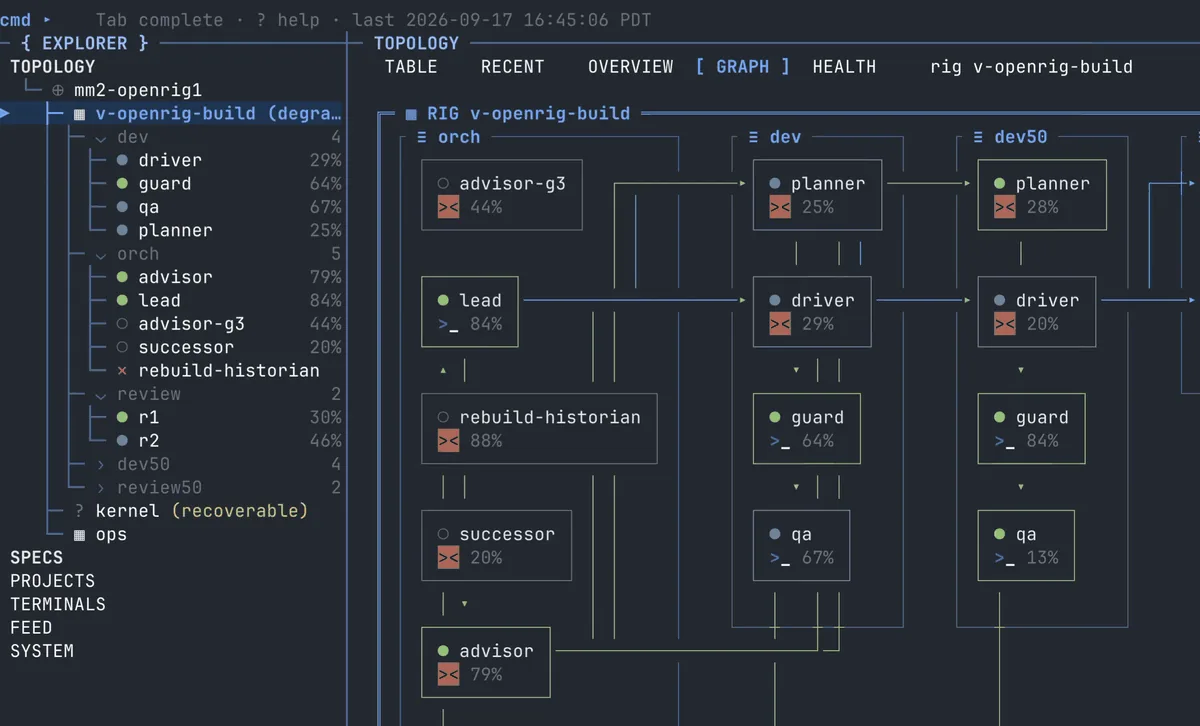
OpenRig Deep Dive: Orchestrating Heterogeneous AI Coding Agents with YAML and tmux
OpenRig crosses 1.6k+ stars by harnessing tmux multiplexing and declarative YAML to transform disparate AI coding tools like Claude Code and Codex into persistent, role-specialized engineering teams.

Deep Dive into Stablyai Orca: Parallel AI Worktrees and Mobile Command Architecture for 100x Builders
Stablyai Orca, capturing over 889.6 stars in a single cycle, addresses critical bottlenecks in modern AI engineering by coordinating parallel agent worktrees, mobile remote supervision, and unified terminal splits under a single desktop framework.
Univer Deep Dive: Shattering the Office Integration Bottleneck for AI Agents with Canvas Rendering and Isomorphic Architecture
A rigorous technical evaluation of Univer Office SDK (2.1W+ Stars). Discover how its isomorphic architecture, Canvas-based rendering, and plugin-first design empower developers to build high-performance spreadsheets and documents in both browsers and Node.js for seamless human-agent collaboration.
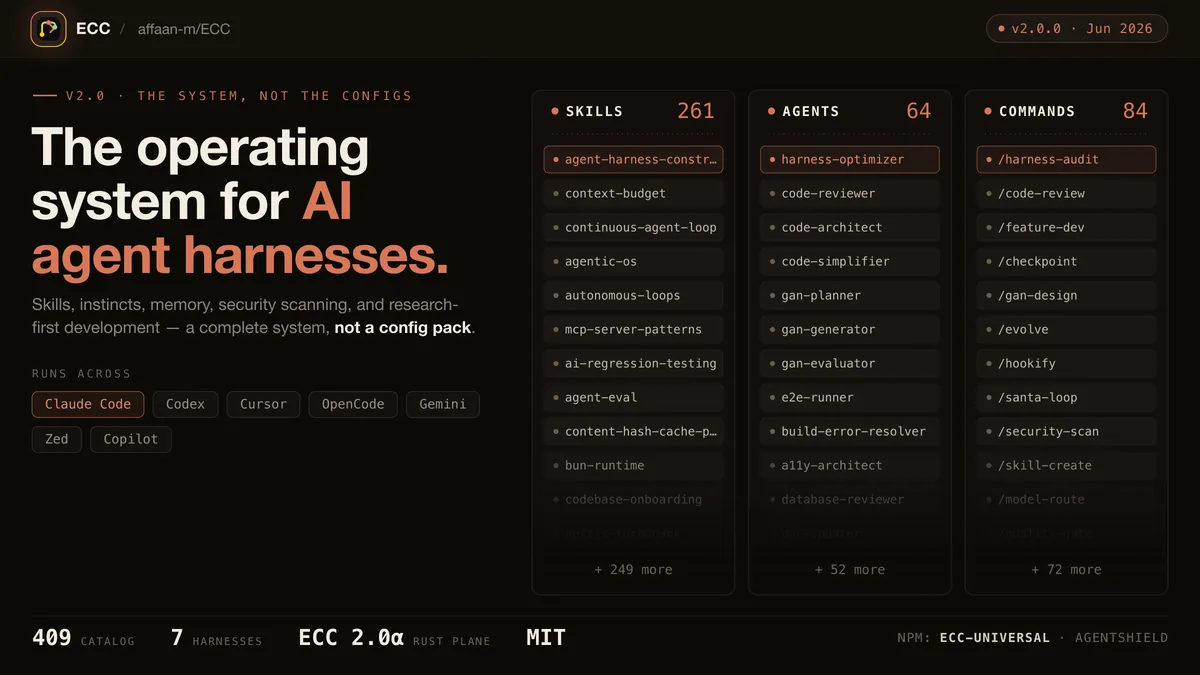
Breaking the Context Maze: How ECC Powers Autonomous Agents with an Operating System
Exploding with over 26.9K stars, ECC introduces an agent harness operating system that systematically eliminates context pollution and state drift in LLM coding workflows.
Paperclip Architecture Deep Dive: Managing Autonomous AI Agent Corporations
Paperclip delivers a Node.js and React stack that structures fragmented AI agents into a unified organizational chart. By aligning tasks, scheduling heartbeats, and enforcing strict budget controls, it eliminates multi-agent coordination chaos.