
1. The Core Bottleneck: What Engineering Flaw Does It Smash?
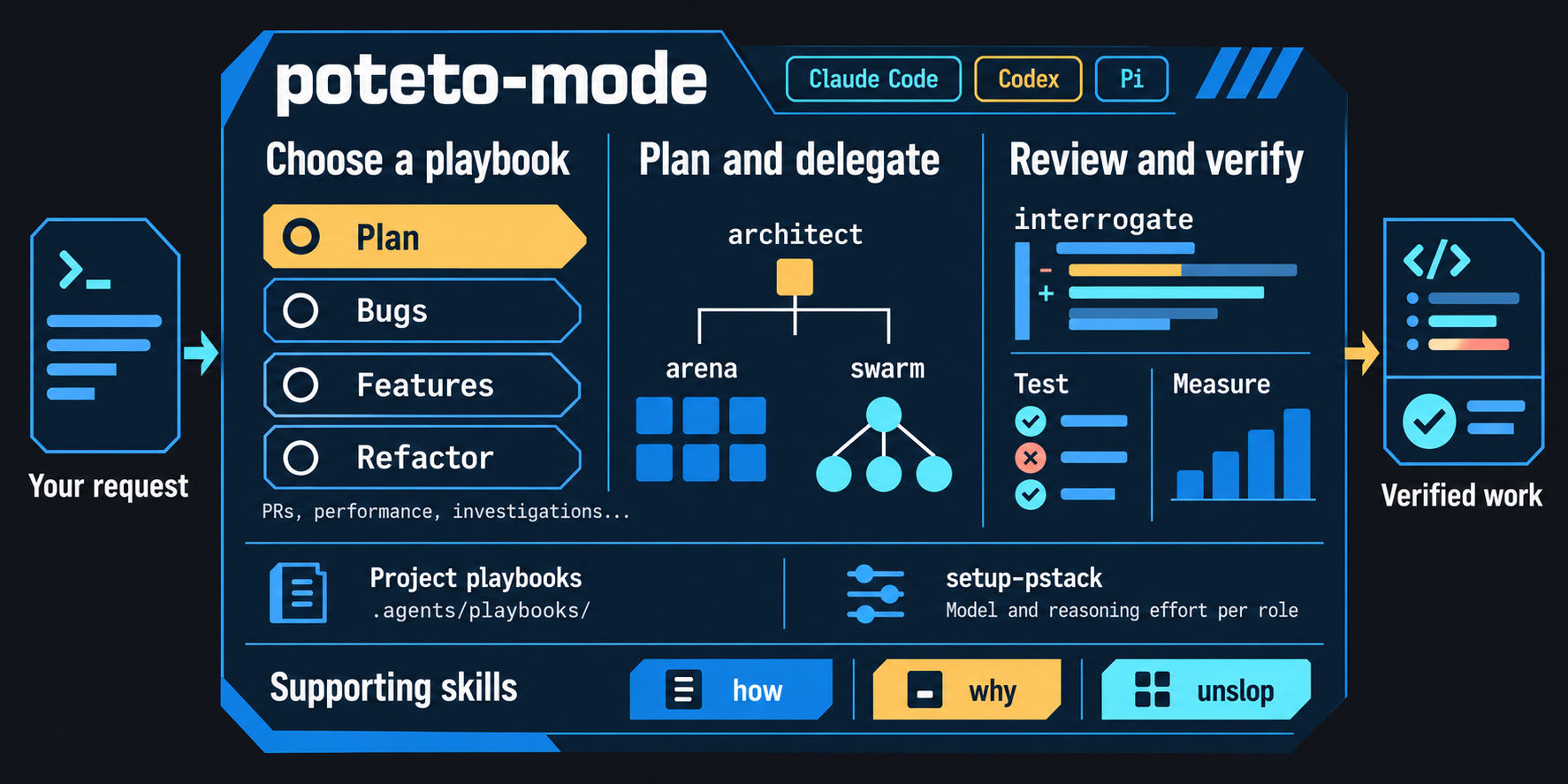
Mainstream AI coding assistants frequently fall into a state of aimless, open-ended generation. When developers input complex bug fixes or architectural refactoring commands, models tend to bypass rigorous root-cause investigations, modifying code blindly and triggering cascading regression errors. This interaction paradigm, devoid of state machine constraints and role isolation, leads to severe context pollution after multiple turns, ultimately yielding fragile code that fails automated testing. The michael-denyer/pstack-claude project successfully ports Lauren Tan's opinionated Cursor skill stack into independent agent runtime environments including Claude Code, Codex, and Pi. By injecting explicit policy assertions and role separation constraints, this architecture forces large language models to pass through problem reproduction, path investigation, and architectural review phases before taking action, effectively terminating agent execution divergence.
💡 Core Architectural Insight: pstack-claude replaces model probabilistic wandering with structured runtime policies, forcibly integrating unconstrained text generation into a deterministic software engineering lifecycle pipeline.
2. Core Architecture and Underlying Data Flow
The underlying runtime of pstack-claude relies on a carefully crafted plugin extension layer. When users input specific commands into the CLI terminal, the routing mechanism intercepts the input and dispatches it to the corresponding skill modules. The core driver of the entire lifecycle is poteto-mode, which upon receiving a goal instruction, sequentially activates the how and why toolchains for static analysis and dynamic behavior tracking. If modifications cross function boundaries, the system actively mounts the architect subagent for solution reviews. All intermediate states and test evidence are persistently recorded and finally handed over to interrogate for verification.
[ User Input CLI ] ---> [ Routing Hook / Extension Parser ] ---> [ poteto-mode Orchestrator ]
                                                                          │
                                                 ┌────────────────────────┴────────────────────────┐
                                                 ▼                                                 ▼
                                       [ how / why Investigation ]                     [ architect Delegation ]
                                                 │                                                 │
                                                 └────────────────────────┬────────────────────────┘
                                                                          ▼
                                                        [ Verification / interrogate & Tests ]
Observing the data flow, this project cleverly decouples intent parsing from the execution engine. The plugin installs routing hooks in Claude Code and Codex while injecting native extension tools into the Pi runtime. This architectural design allows developers to precisely allocate reasoning effort per agent role—for instance, setting arena runners to opus @xhigh to ensure high compute density at critical reasoning nodes while avoiding exorbitant all-link token overhead.
3. Technology Selection and Hardcore Performance Benchmarking
| Evaluation Dimension | This Solution (pstack-claude) | Traditional Native LLM Chat | Basic IDE Plugin Assistance | Monolithic Script Automation |
|---|---|---|---|---|
| Constraint Mechanism | Strong state machine & playbooks | Zero-constraint probabilistic gen | Basic syntax highlighting & hints | Hardcoded regex matching |
| Task Decomposition | Auto-delegation to architect & subagents | Single prompt execution throughout | Restricted to single-file local edits | Fixed linear scripts without self-heal |
| Context Control | Dynamic routing filtering & distillation | Rapid degradation over turns | Limited to IDE memory window cache | Global context easily overflows |
| Production Verification | Mandatory failing/passing evidence link | No automated checks or back-tests | Relies on manual human code review | Executes basic unit test gates only |
| Cross-Environment Support | Claude Code, Codex, Pi supported | Heavily bound to vendor closed loop | Bound to specific IDE clients | Maintenance spikes with environments |
This benchmark data exposes the core moat of pstack-claude. Rather than reinventing the wheel by training foundation models, it utilizes a high-density engineering orchestration layer to firmly lock existing general-purpose models onto normative software engineering tracks, transforming non-deterministic AI into a deterministic engineering auxiliary.
4. Hands-On Geek Practice: Building a Minimum Closed Loop from Scratch
Deploying this plugin stack in production environments relies on standard terminal marketplace commands. Taking Claude Code as an example, the entire installation and initialization process requires only two standard commands, after which the pstack extension toolset is injected locally.
# Add the official plugin marketplace source inside the Claude Code terminal
/plugin marketplace add michael-denyer/pstack-claude

# Formally install the pstack core plugin package
/plugin install pstack@pstack-claude

# Launch the setup wizard to adjust model defaults and role reasoning effort
/pstack:setup-pstack
Once installed, trigger a practical debugging task via poteto-mode. Input a specific business repair request in the terminal and observe the trajectory of its automated workflow:
Use poteto-mode to fix the search filter resetting when I change pages.
Upon receiving this instruction, the system automatically executes the following action chain: first, it reproduces the failing case where the search filter resets; next, it invokes how and why to deep-dive into state management source code; then, it delegates to architect to generate a cleanly bounded patch plan; finally, after applying the patch, it re-runs the failing case and outputs a complete passing evidence chain.
5. Production Gotchas and Avoidance Strategies
Integrating pstack-claude into high-intensity production pipelines with hundreds of daily commits requires vigilance against several hidden engineering traps. Chief among them is the security hook interception issue in Codex runtime environments.
⚠️ Gotcha Warning [Codex Hook Unauthorized]: Codex suspends execution due to security policies when loading plugin routing hooks for the first time. Developers must proactively run the
/hookscommand in the terminal and confirm trust in the plugin; otherwise, backend routing instructions cannot inject correctly, causing all/skillinvocations to fail silently.
Another frequently overlooked pain point is reasoning effort overload. Blindly enabling the highest reasoning levels (such as @max or @xhigh) for all agent roles via setup-pstack directly drives up API billing and significantly increases end-to-end cold start latency for individual tasks. The optimal engineering practice is to elevate effort levels exclusively on the architect role involved in core architectural adjustments, keeping default session effort for routine investigation and test verification stages to strike a balance between execution quality and token cost.
⚠️ Gotcha Warning [High-Effort Reasoning Budget Runaway]: Unconditionally enabling high-intensity reasoning effort globally increases token consumption per task by 3 to 5 times. It is recommended to fine-tune effort allocation per role via policy configurations to prevent non-critical subagents from swallowing precious budget allocations.