1. The Core Bottleneck
LLM post-training has long been held hostage by infrastructure complexity. Engineering teams routinely waste valuable cycles debugging distributed environment configurations, dropping SSH tunnels, and managing out-of-memory errors. Traditional toolchains demand dedicated accelerator clusters, shutting out local experimentation. Soup reorganizes the training control flow by reducing configuration to a single YAML file and eliminating infrastructure friction.
💡 Architectural Insight: By decoupling frozen base weights from VRAM and streaming decoder layers on demand, Soup redefines the hardware boundaries for consumer-grade model tuning.
2. Core Architecture & Data Flow
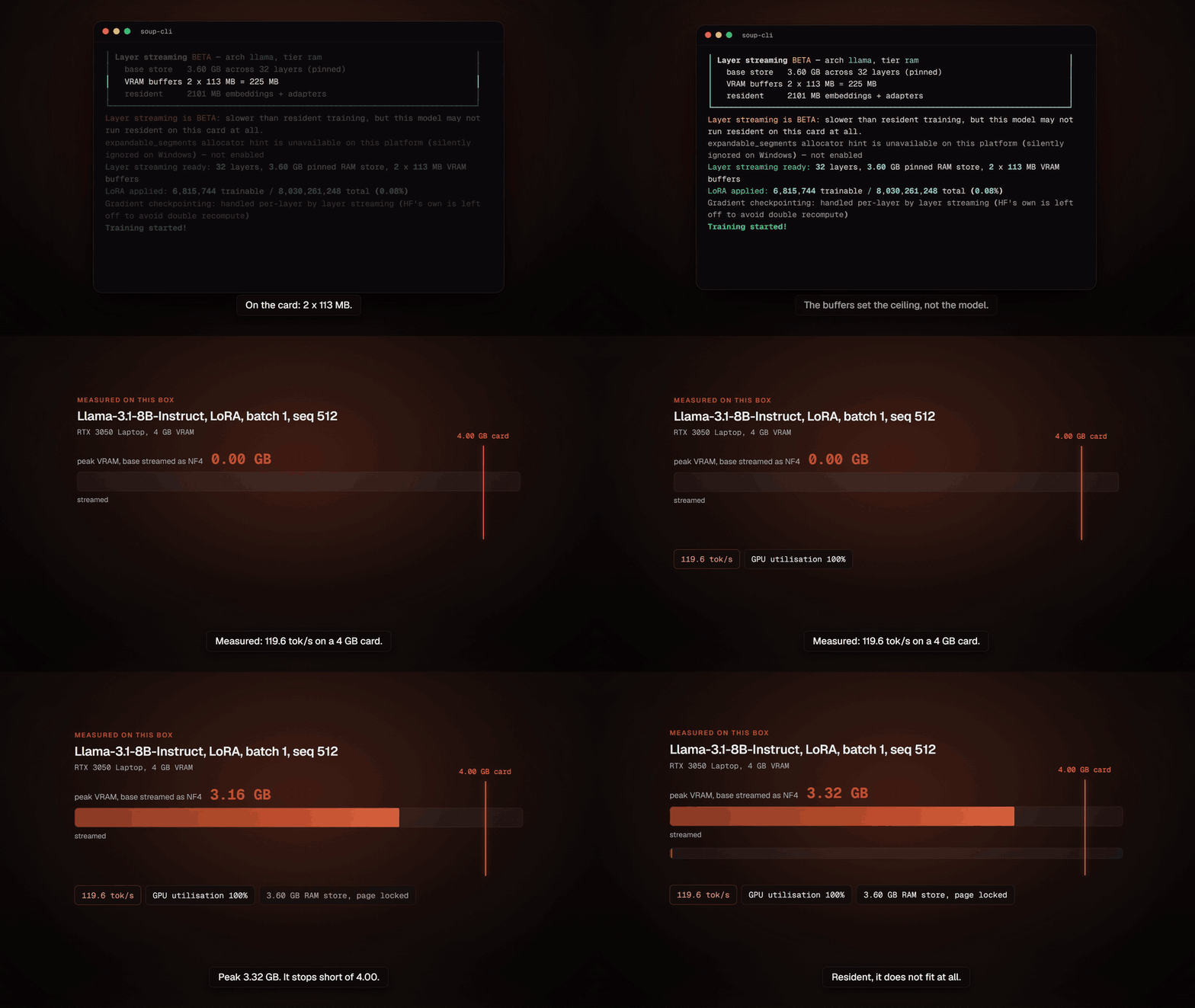
The runtime mechanism of Soup replaces traditional resident VRAM allocation with a streaming scheduler. When a training job starts, the engine pins base model weights in system RAM and feeds them to the GPU one decoder layer at a time. This execution model maintains mathematical exactness while suppressing memory footprints.
[ Config / YAML ] ---> [ CLI Parser ] ---> [ Layer Streaming Engine ]
                                                    │
                                                    ▼
[ RAM: Frozen Base Layers ] <--- (Batch Feed) ---> [ VRAM: 4GB GPU Buffer ]
v0.75.0 introduces strict configuration schema enforcement. Unknown keys or typos now trigger immediate termination rather than silent failures, preventing unapplied settings during long training runs. Furthermore, backend schedulers align MLX operations to guarantee consistent behavior across optimizer selections and scheduler configurations.
3. Technology Selection & Hardware Benchmark
| Evaluation Metric | Soup Framework | Traditional Pipeline | Alternative CLI Tools | Production Benefit |
|---|---|---|---|---|
| VRAM Footprint | 3.32 GB (8B Model) | 16 GB+ Required | 8 GB to 12 GB | Lowers hardware entry bar for local debugging |
| Configuration | Single YAML File | Scattered Shell Scripts | Heavy Web Consoles | Eliminates config hell, enables instant startup |
| Dependency Chain | Unified CLI Package | Clustered Orchestrators | Fragmented Python Libs | Reduces package conflicts, ensures stability |
| Error Handling | Strict Schema Validation | Silent Parameter Drop | Runtime Failures | Catches typos early, prevents wasted compute cycles |
These metrics illustrate Soup's dominance in edge and local training environments by stripping away unnecessary orchestration layers.
4. Hands-On Minimal Implementation
Setting up a local training loop requires minimal steps. Ensure your host environment runs Python 3.10 through 3.12.
# Install the CLI package with training extensions enabled
pip install "soup-cli[train]"

# Generate a baseline chat template configuration file
soup init --template chat

# Execute the local fine-tuning pipeline
soup train
The initialization command generates a declarative YAML file where batch sizes, learning rates, and streaming switches can be adjusted. Executing the train command automatically detects local GPU capabilities, applies quantization, and streams convergence metrics directly to the terminal.
5. Production Gotchas & Pitfalls
Deploying experimental training tools into professional workflows requires vigilance regarding version constraints and schema updates.
⚠️ Pitfall Warning [Python Version Mismatch]:Python 3.13 and newer resolves unvetted PyTorch binaries that crash native extensions before execution begins. Production hosts must pin Python versions strictly between 3.10 and 3.12.
⚠️ Pitfall Warning [Strict Schema Enforcement]:Starting with v0.75.0, unrecognized configuration keys trigger an immediate exit with code 1. Typos that were previously ignored silently now require explicit migration when updating older project manifests.