
1. The Core Bottleneck: What Engineering Pain Point Does It Smash?
Global internet television distribution has long been trapped in a non-standardized swamp. Public live stream URLs are scattered across various forums, instant messaging groups, and automated scraping scripts, characterized by short lifespans, frequent failures, and missing metadata. Developers building multi-platform media players or aggregation apps traditionally waste massive effort cleaning chaotic URLs.
iptv-org/iptv alters this paradigm by aggregating globally available IPTV channels into standardized M3U playlists, routing scattered streaming assets into a single unified entry point. It hosts zero video files; instead, through strict database decoupling and continuous integration checks, it provides pure routing metadata. Developers bypass complex scrapers targeting volatile streaming endpoints, directly consuming statically hosted index files to obtain structured live streams.
💡 Core Architectural Insight: By completely detaching the stream routing table from video content, the project turns a complex legal and operational black hole into a pure, distributed static data pipeline.
2. Core Architecture and Data Flow Analysis
iptv-org/iptv is not an isolated monolith, but operates alongside sibling repositories like database, api, and epg to form a distributed data factory. Data flows in from issues and pull requests submitted by global contributors, passes through automated CI connectivity validation and pattern matching, and finally distributes in real time via GitHub Pages.
[ Contributors / Scrapers ] ---> [ iptv-org/database ] ---> [ CI/CD Validation Engine ]
                                                                   │
                                                                   ▼
[ Any Video Player ] <--- [ GitHub Pages (index.m3u) ] <--- [ iptv-org/iptv ]
The underlying data flow consists of three distinct phases. Client players issue HTTP requests to retrieve index.m3u; this index references sub-playlists segmented by country, language, and category; every entry within sub-playlists carries standardized attribute tags (e.g., tvg-id, tvg-name, group-title). Electronic program guides and channel metadata reside in separate repositories, linked via unique identifiers to keep the master playlist lean and high-performing.
3. Technology Selection and Hardcore Performance Comparison
| Selection Dimension | This Project (iptv-org/iptv) | Traditional Commercial IPTV | Custom Scraper Approach | Private Source Maintenance |
|---|---|---|---|---|
| Data Sourcing | Community driven & CI | Commercial licensing | Custom python scrapers | Manual curation |
| Availability Risk | Dependent on origin state | Carrier-grade guarantees | Frequently blocked by targets | Rapid link rot over time |
| Storage & Bandwidth | Static hosting, zero cost | Requires CDN & relay nodes | Local server storage cost | Private cloud object storage |
| Protocol Support | Standard M3U / HLS / DASH | Bound to proprietary clients | Varies by target stream | Depends on source format |
| Compliance | Link-only, avoids hosting | Full content liability | Legal grey area | Potential copyright infringement |
This technology selection completely eliminates centralized server relay bandwidth overhead. By caching zero video files, the project avoids massive bandwidth bills and direct copyright liabilities. Clients connect directly to stream origins, providing exceptional resilience and scaling limits.
4. Hands-On Geek Practice: Building the Minimal Closed Loop
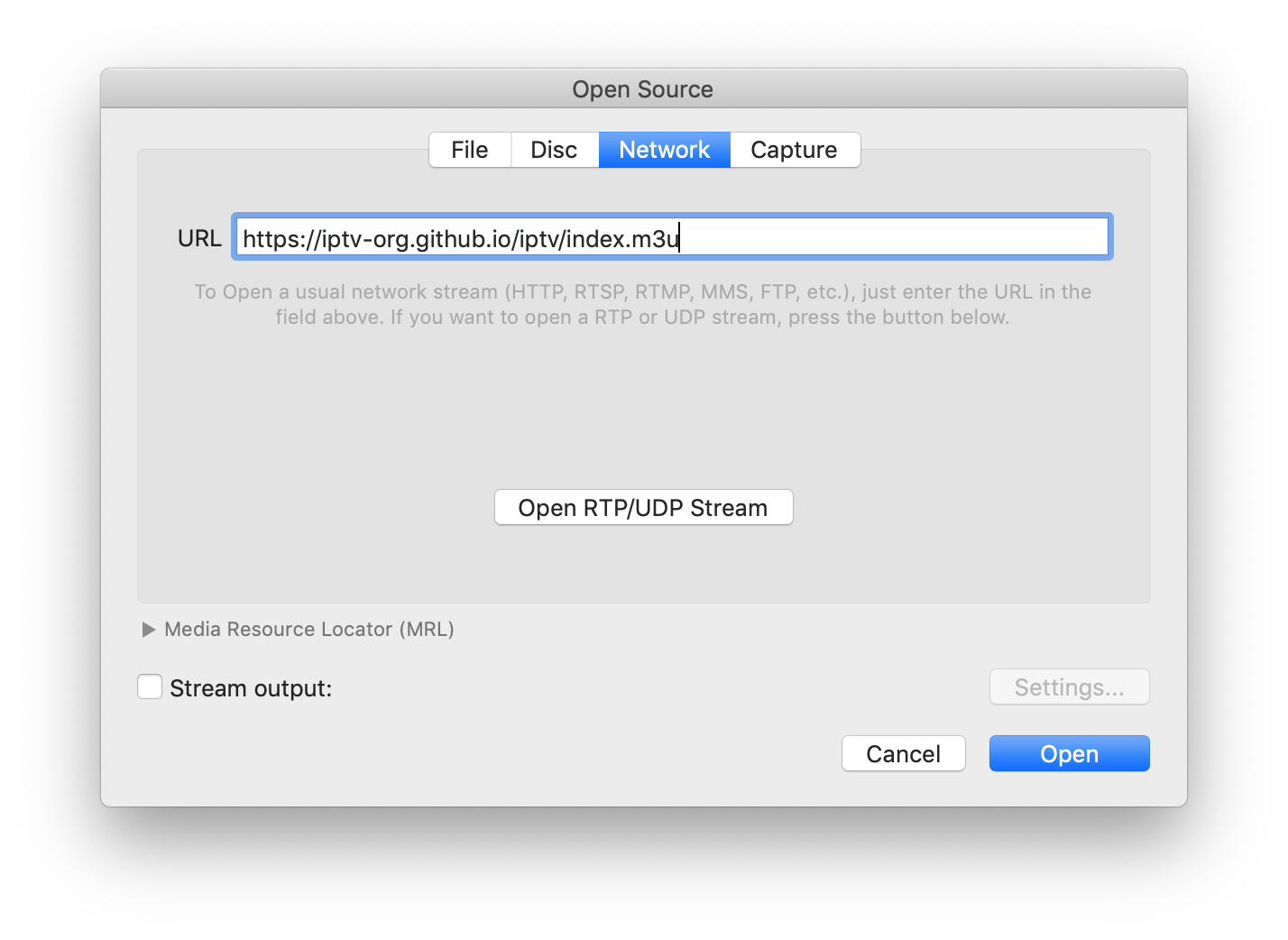
Integration requires no complex dependency installation or container orchestration. Any player supporting HTTP live streaming can directly load its core index. The following Python script fetches the master index and filters streams by target country:
import urllib.request

# Define the official master playlist URL
PLAYLIST_URL = "https://iptv-org.github.io/iptv/index.m3u"

def fetch_and_filter_streams(target_country):
    # Execute HTTP request to fetch remote M3U raw text stream
    req = urllib.request.urlopen(PLAYLIST_URL)
    content = req.read().decode('utf-8')

    # Parse M3U file structure line by line
    lines = content.splitlines()
    streams = []
    current_meta = ""

    for line in lines:
        if line.startswith('#EXTINF'):
            current_meta = line
        elif line and not line.startswith('#'):
            # Match stream URLs associated with specific country codes
            if f'tvg-country="{target_country}"' in current_meta:
                streams.append({
                    "meta": current_meta,
                    "url": line
                })
    return streams

# Retrieve live stream channels for China (CN)
cn_streams = fetch_and_filter_streams("CN")
print(f"Successfully captured {len(cn_streams)} valid live channels.")
if cn_streams:
    print(f"Sample playback URL: {cn_streams[0]['url']}")
Executing this script prints the count of valid streams for the target country and the first available push URL. Developers can pass this URL directly into VLC, MPV, or custom media player cores for rendering.
5. Production Pitfalls and Gotchas
The ecological nature of open-source live streams dictates that production environments cannot enjoy commercial SLA guarantees. Integrating this project into real-world products requires deliberate handling of source failures and availability jitter.
⚠️ Gotcha Warning [High Source Attrition]: The lifespan of public streams depends on third-party server stability, causing links to break at any moment. Architecture designs must incorporate asynchronous health checking mechanisms, periodically probing playlist URLs via HEAD or GET requests to dynamically prune unresponsive or 404/503 entries.
⚠️ Gotcha Warning [Protocol and Codec Fragmentation]: Collected stream URLs span multiple transport protocols including HLS (m3u8), RTMP, and HTTP-TS. Client player engines must pack robust multi-protocol demuxing and decoding capabilities to prevent rendering failures or audio-video desynchronization.