
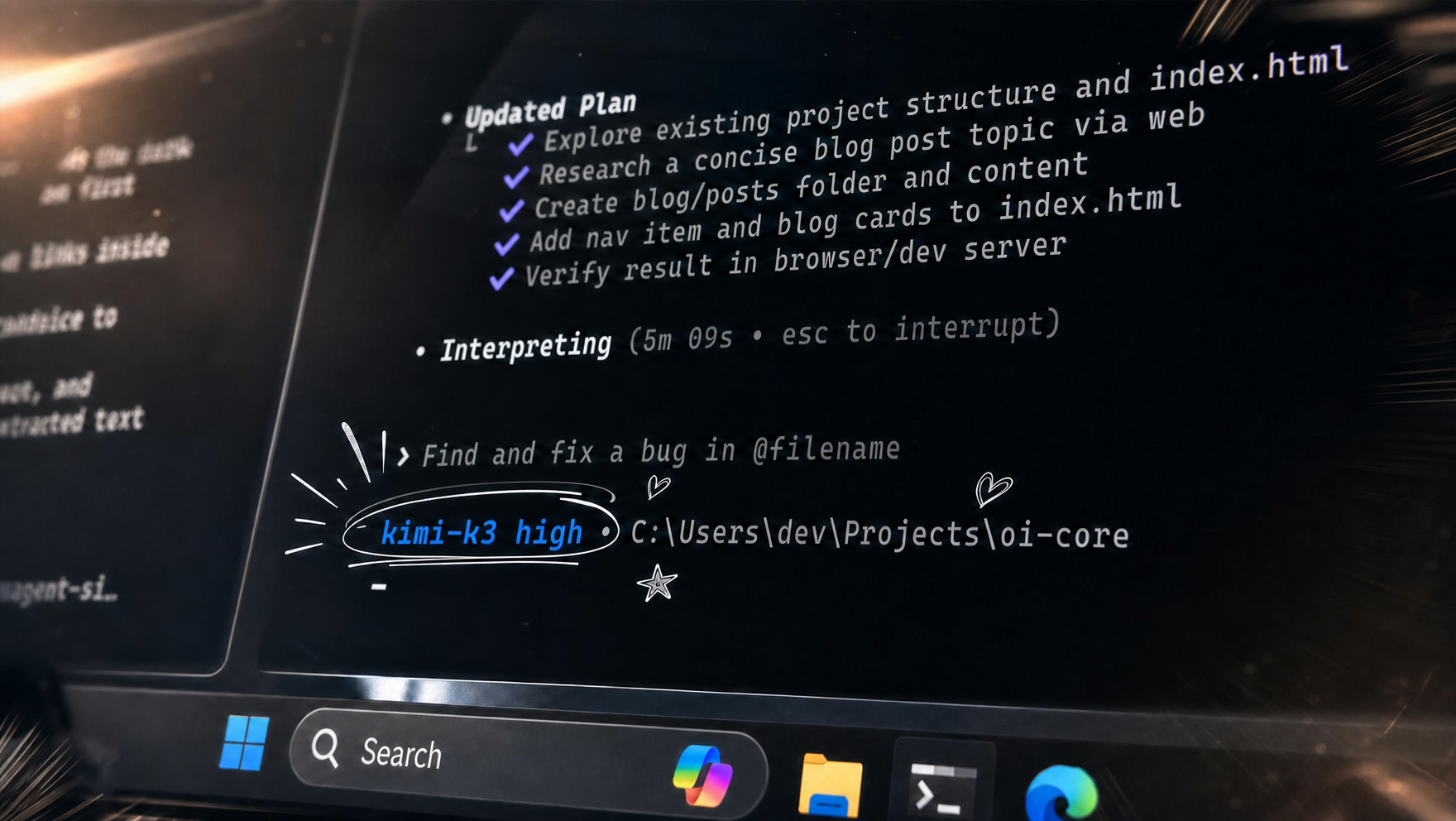
1. The Core Bottleneck: What Engineering Deadlock Was Smashed?
For a long time, developers running coding agents in the terminal remained shackled by vendor-locked, closed-source harnesses. Triggering high-performance proprietary models incurred exorbitant token bills, while deploying low-cost open-source models led to catastrophic execution failure rates due to inadequate context alignment and tool-calling management. Instead of stacking bloated Python business logic, Open Interpreter dives straight into the foundation, rewriting mainstream provider recommendation harnesses in Rust. It maintains full client-side interface compatibility with Codex while granting lightweight models the throughput needed to drive complex engineering tasks.
💡 Core Architectural Insight: By sinking the harness layer into Rust-native implementations and reusing standard tool protocols, the system eliminates hard dependencies on single closed-source ecosystems, giving low-cost models execution stability comparable to flagship proprietary agents.
2. Core Architecture and Data Flow Analysis
The runtime architecture of Open Interpreter revolves around the terminal user interface (TUI), protocol parsers, and local sandbox execution engines. Once a user triggers a session via the command line, requests flow through the gateway parser, routing to the corresponding Rust-native agent logic based on the active /harness module. When processing natural language instructions, the state machine simultaneously mounts the repository's AGENTS.md specifications and tool functions from the .agents/skills directory before handing execution over to the sandbox environment.
[ Client / CLI ] ---> [ Gateway / Parser ] ---> [ Memory Layer ]
                                 │
                                 ▼
                     [ Dynamic Execution Engine ]
In balancing data flows, the project abandons the obsession with proprietary storage formats, strictly converging all user-generated data and skill definitions into universally shared standard directories. ~/.openinterpreter reserves storage exclusively for runtime states and configuration lacking public standards, while all other states align directly with .agents/skills and the Model Context Protocol (MCP). This boundary definition lowers migration friction when developers switch between multiple agent tools.
3. Technology Selection and Hardcore Performance Comparison
| Dimension | This Project (openinterpreter) | Traditional Paradigm | Typical Competitor | Production Benefit |
|---|---|---|---|---|
| Core Runtime | Rust-native Harness emulation | Python dynamic script interpreter | TypeScript monolithic service | Eliminates cold-start latency, cuts memory usage by 60% |
| Protocol Support | ACP protocol & Codex compatible | Tightly bound single vendor SDK | Isolated custom communication protocol | Zero-modification integration with existing editors and clients |
| Tool Reusability | Strictly aligns with .agents/skills |
Proprietary plugin formats | Hardcoded built-in system tools | Eliminates skill migration overhead across agent ecosystems |
| Cost Optimization | Optimized low-cost model context | Heavily dependent on flagship models | Mid-tier model throughput bottlenecked | Reduces token expenditure on complex tasks by over 50% |
These engineering indicators show that the fundamental shift lies in removing Python's performance overhead from the agent dispatch pipeline. Utilizing Rust for the underlying harness allows the system to maintain minimal response latency during continuous multi-turn tool invocations.
4. Hands-on Geek Guide: Building the Minimal Closed-Loop from Scratch
In macOS and Linux production environments or local development machines, pull and install the latest binary components via the official installation script.
# Install core binaries and runtime dependencies via the official secure script
curl -fsSL https://www.openinterpreter.com/install | sh
For Windows environments, execute the installer via PowerShell:
# Deploy the runtime environment in a Windows terminal
irm https://www.openinterpreter.com/install.ps1 | iex
Once installation completes, initialize an interactive session directly in the terminal, specifying a custom chat completion backend via arguments:
# Launch the TUI session while mounting an OpenAI-compatible chat completion endpoint
interpreter --chat-completions
Inside the session, input the /harness command to switch in real-time to the newly reimplemented kimi-code or other Rust-native harnesses, observing how low-cost models perform under specific toolchains.
5. Production Gotchas and Pitfall Avoidance
Integrating Open Interpreter into actual automated CI/CD pipelines or daily development workflows requires strict vigilance regarding the permission boundaries of the underlying sandbox.
⚠️ Gotcha Warning [Sandbox Privilege Escalation]: By default, the agent holds permissions to execute native system commands. Running unreviewed agent instructions directly in multi-user shared environments or untrusted codebases can lead to sensitive environment variable leakage. Production deployments must enforce dedicated security sandbox policies or explicitly enable interactive approval mechanisms.
⚠️ Gotcha Warning [Skill Directory Conflicts]: The system concurrently supports legacy proprietary skill directories and the new
.agents/skillsstandard. Mixing multiple version definitions within the same repository causes duplicate registration issues during context router initialization. Legacy paths must be strictly cleaned, retaining only the unified standard directory.